
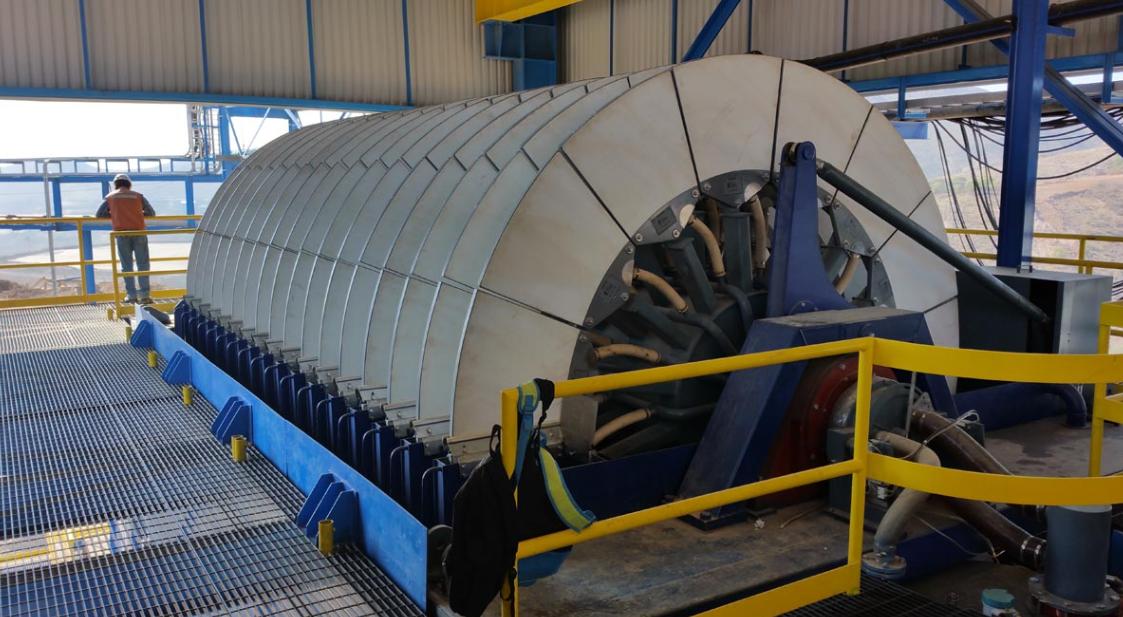
If you’ve spent any time around a mine site, you’ll know there’s always a mountain of material moving around. Crushing, grinding, slurry lines running everywhere. But one step that doesn’t get much spotlight is how you actually handle all that slurry and water afterwards. That’s where equipment like a mining disc filter or a mining thickener steps in, doing the not-so-glamorous but absolutely critical work.
Thickener – The “First Pass” Cleanup
Think of a thickener as the settling tank on steroids. Ore is processed, ground down, mixed with water, and suddenly you’ve got this giant soupy mess that can’t just be pumped back into the environment. A mining thickener uses gravity (plus a bit of clever engineering) to let solids sink and water rise. It’s not fast, but it’s efficient. What you get is a more concentrated underflow (the solids) and a clearer overflow (the water).
Why does this matter? Two big reasons:
- Water recovery – in mining, water is money. Recycling it means less dependency on pulling from external sources.
- Tailings management – less volume, easier to store, safer in the long run.
Disc Filters – Taking It a Step Further
Now, once the thickener has done its job, you’re still often left with material that’s too wet to transport or stack easily. Enter the mining disc filter. Picture a series of rotating discs, dipping into the slurry. Vacuum pulls the liquid through a filter medium, leaving a damp but more solid cake on the surface. That cake then gets scraped off.
It’s not glamorous work, but the payoff is huge: less moisture means cheaper transport, safer storage, and sometimes even the ability to reuse materials.
How They Work Together?
In practice, these two pieces of equipment aren’t really competitors—they’re teammates. The thickener handles the bulk, the heavy lifting of separating most of the water out. The disc filter then comes in as the “finisher,” tightening up the moisture levels so material is actually manageable. Mines chasing efficiency often run both, tuning the systems depending on ore type, climate, and production demands.
Common Headaches on Site
Of course, anyone who’s operated these machines knows they’re not just plug-and-play. Thickeners can suffer from poor flocculation if chemicals aren’t right. Filters clog, vacuum lines lose efficiency, and maintenance crews end up elbow-deep in slurry more often than they’d like. Still, compared to trying to run without them, the headaches are worth it.
Why It Matters Today?
As environmental regulations tighten and costs climb, equipment like mining disc filters and mining thickeners stop being “extras” and start becoming essentials. They keep operations compliant, cut down on waste, and help mines squeeze every drop of value from their resources.